
Volunteer and Mutual Aid Coordination Tools
Volunteer and Mutual Aid Coordination Tools
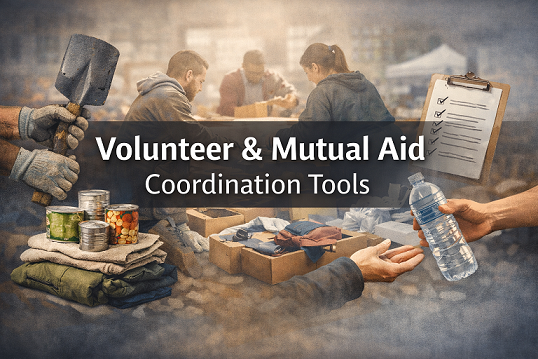
Volunteer and Mutual Aid Coordination Tools exist to help people organize effort, skills, and assistance without requiring employment relationships, monetary exchange, or centralized control.
These tools are designed for communities that want to coordinate help responsibly while preserving individual autonomy, flexibility, and consent.
Participation is always voluntary.
[ Download the Toolkit: CHF-Volunteer-Coordination-Toolkit.zip]
Purpose of These Tools
Many community efforts struggle not because people are unwilling to help, but because:
-
tasks are unclear
-
expectations are mismatched
-
communication breaks down
-
a few people become overloade
This program provides lightweight coordination structures that help communities organize assistance without turning it into work, obligation, or hierarchy.
What These Tools Support
These coordination tools may be used to organize:
-
Volunteer efforts
-
Mutual aid initiatives
-
Skill-sharing arrangements
-
Community work days
-
Temporary assistance needs
-
Non-monetary contribution systems
They are intended to support cooperation, not enforce performance.
What These Tools Are Not
To be clear, these tools:
-
Do not create employment relationships
-
Do not require minimum participation
-
Do not track hours for compensation
-
Do not mandate outcomes
-
Do not assign authority over participants
No one is obligated to volunteer, continue participating, or accept tasks.
Core Principles
These tools are built around a few simple principles:
Voluntary Participation
All involvement is opt-in and may be discontinued at any time without penalty.
Clarity Without Enforcement
Tasks, expectations, and boundaries are clearly stated, but participation is never forced.
Decentralized Coordination
Coordination may be facilitated by individuals or small groups, but authority remains distributed.
No Hero Dependence
Systems are designed to avoid burnout by preventing reliance on a single organizer or “most responsible” person.
Examples of Use
Communities may use these tools to:
-
Post requests for help or skills
-
Coordinate short-term volunteer efforts
-
Share knowledge or labor informally
-
Organize rotating responsibilities
-
Track needs without assigning blame
Each community decides what tools to adopt and how strictly to use them.
Responsibility and Boundaries
Each participant remains responsible for their own actions.
Communities using these tools are responsible for:
-
complying with local laws
-
ensuring safety
-
managing risk appropriately
Charity Helpers Foundation does not supervise, direct, or manage volunteer activity unless explicitly stated.
Relationship to Other Programs
These coordination tools may be used alongside:
-
Lodge-based community systems
-
Mutual assistance communal living
-
Essentials Lottery coordination
-
Independent community initiatives
They are modular and may be adopted independently.
How to Use or Adapt These Tools
Communities may:
-
Use the templates as provided
-
Modify them for local needs
-
Combine them with existing systems
-
Fork them into independent frameworks
Use of these tools does not imply endorsement, affiliation, or oversight unless explicitly stated.
Why This Program Exists
Mutual aid works best when it is:
-
clear
-
voluntary
-
respectful
-
sustainable
These tools exist to help communities help each other without burning out, coercing participation, or concentrating power.